- 0 views
- By Caroline McNally
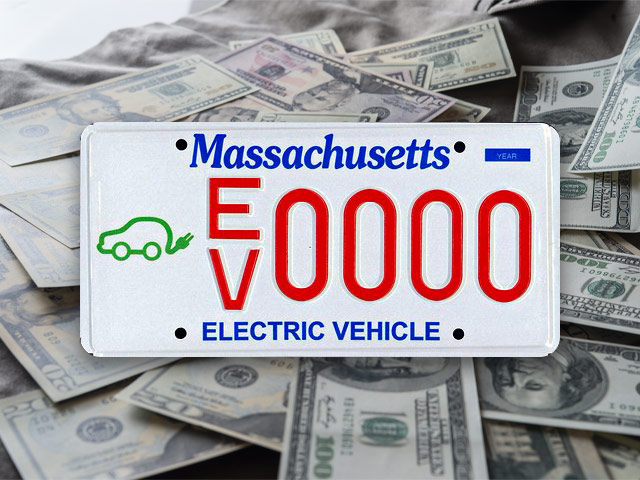
In early February 2024, the Healey–Driscoll Administration announced a $50 million investment from the American Rescue Plan Act (ARPA)—the first tranche of Massachusetts’s National Electric Vehicle Infrastructure (NEVI) formula funding—aimed at dramatically expanding EV charging infrastructure across the Commonwealth.
This ARPA allocation channels NEVI dollars directly into high-priority areas:
- Accelerating curbside charging in urban and environmental‑justice communities, with $12.5 million directed to MassCEC for curbside and streetlight chargers.
- Supporting medium- and heavy-duty mobile charging solutions ($9.5 million) to electrify fleets that transit through densely populated or EJ communities
- Electrifying taxis, ride-hail, and state fleets, boosting charger adoption for Uber, Lyft, municipal, and state-owned vehicles.
Governor Healey stressed the importance of lowering the barrier to EV ownership by expanding charging access, while Lieutenant Governor Driscoll emphasized equitable outcomes and environmental justice.
Building on a Robust EV Incentive Infrastructure
Massachusetts already has a strong ecosystem of EV incentives that sync well with the NEVI‑ARPA investment:
- MOR‑EV rebate program: Residents, businesses, and non-profits can claim rebates between $3,500 and $6,000 for battery EVs—and even medium‑ and heavy‑duty trucks and buses can receive $15,000–$90,000 rebates through MOR‑EV Trucks.
- MassEVIP charging and fleet grants: Public agencies, workplaces, and fleets qualify for:
- Up to $7,500 per EV purchase (or $5,000 per lease).
- Up to 60 % off the cost of Level 1/2 charger installations, up to $50,000 per address
- Utility-based rebates: Municipal light plants like Concord, Norwood, Shrewsbury, and others offer $350 to $1,700 rebates for residential EVs and home chargers. Large-scale projects—such as workplace or multifamily chargers—can receive up to $400,000 per DC fast-charging site.
- Federal clean vehicle tax credits: Buyers can claim up to $7,500 (new EVs) or $4,000 (used EVs) at point-of-sale through IRS-registered dealerships.
Electrifying the Public and Private Fleets
Massachusetts has made decisive moves to electrify its vehicle fleets:
- State fleet electrification: A portion of the ARPA $50 million supports DCAMM and DOER in transitioning state vehicles to electric.
- MassEVIP fleets: Government entities can tap into reimbursements of up to $7,500 per battery EV and $5,000 per PHEV (and $3,000 per PHEV lease) .
- MOR‑EV Trucks: Medium- and heavy-duty vehicle fleets—including school buses—qualify for substantial rebates ($15K to $90K per vehicle), with extra incentives in environmental justice zones.
Additionally, mobile charging solutions for trucks and buses are part of the $9.5 M NEVI‑ARPA funding, ensuring that hard-to-reach fleet vehicles aren’t left out.
Integrating the Bigger EV Ecosystem
The $50 million NEVI‑ARPA push doesn’t operate in isolation—it’s woven into the broader landscape:
- NEVI highway fast-charging rollout: Work is underway to build DC fast chargers on I‑195, I‑495, and Route 2 corridors near Wrentham, Littleton, Wareham, North Adams, and Lancaster, all backed by federal NEVI funds.
- Public-access charger grants: MassEVIP offers 80–100 % of Level 2 charger installation costs to public entities, typically capping out at $50,000; government properties qualify for full 100 % funding
qmerit.com. - Grid impact and charger reliability: ARPA funds also back efforts at the Division of Standards for public charger inspections and at EVICC for grid-integration analysis.
This layered approach ensures both corridor-based rapid charging and localized access for daily EV drivers.
Looking Ahead: The Road to 2035 and Beyond
Massachusetts has bold goals: all new vehicle sales must be zero-emission by 2035, with parallel ambitions for municipal and utility fleets.
Here’s what lies ahead:
- NEVI expansion into 2026: An additional $13.5 million has been earmarked for FY 2026 NEVI deployment, though it remains on hold awaiting federal clearance.
- Further NEVI DC fast-charging: Beyond current sites, MassDOT has approved more locations and expects some chargers to come online before year-end .
- EVICC-guided planning: The Electric Vehicle Infrastructure Coordinating Council will continue assessing future needs and equity-focused infrastructure gaps.
- Scaling multi-family and urban curbside access: MassCEC aims to extend pole- and streetlight-mounted chargers into denser and underserved neighborhoods.
- Ongoing utility collaboration: Utility rebates and grant programs will keep expanding to meet increasing EV charger demand, from residential hubs to fleet depots.
Final Word
Massachusetts’s $50 million NEVI‑ARPA investment marks a significant leap forward in EV infrastructure—targeting curbside access, commercial fleets, fast-charge corridors, and government vehicles. Layered atop robust state and local incentives, it reinforces Massachusetts’s trajectory toward a zero-emission transportation future. With further NEVI funds pending and cutting-edge planning underway, the Commonwealth is well on its way to meeting its 2035 goals and forging a cleaner, greener transportation ecosystem.
Next Up:
- A new round of NEVI‑funded fast chargers along corridors.
- Scaled-down curbside installs citywide.
- Continued expansion of fleet electrification incentives.
- Deepening partnerships across utilities, municipalities, and public agencies.
Get Help from Maverick Electric Vehicle Services
Choosing the right charging station provider is key. Maverick Electric Vehicle Services can guide you through the installation process, ensuring you select the right equipment and setup to maximize efficiency and ROI.
Ready to make your EV installation project a reality? Contact us today and let Maverick’s dedicated EV team lead the way!


Related articles and news
 EV Infrastructure
 Pennsylvania Launches $100 Million NEVI Investment to Expand Community EV Charging
Electric vehicles are becoming more common on American roads, but widespread adoption depends on one critical factor: access to reliable and convenien …
Read more Electric cars
 Cold Current: How Electric Vehicles Handle the Freeze
Winter has always tested vehicles, but for electric vehicles (EVs), cold weather introduces a unique set of challenges. In colder climates across the …
Read more