- 0 views
- By Caroline McNally
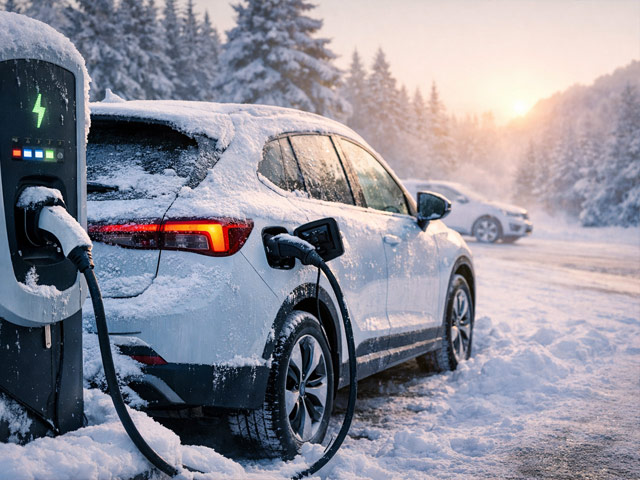
Winter has always tested vehicles, but for electric vehicles (EVs), cold weather introduces a unique set of challenges. In colder climates across the Northeast and Midwest, drivers quickly learn that freezing temperatures affect more than just road conditions. The lithium-ion batteries that power EVs rely on chemical reactions that naturally slow down in low temperatures, reducing efficiency and overall performance. While this doesn’t make EVs impractical in winter, it does mean drivers need to understand how cold impacts their vehicle’s behavior.
One of the most noticeable differences in winter driving is reduced range. Real-world testing has shown that EVs can lose anywhere from roughly 10 to 30 percent of their driving range in freezing conditions. In especially harsh weather, that number can climb even higher depending on driving speed, terrain, and heater use. Cold air increases aerodynamic drag, winter tires add rolling resistance, and cabin heating pulls energy directly from the battery. Unlike gas-powered cars that rely on engine heat to warm the cabin, EVs must use stored battery power to generate warmth.
Charging can also be affected when temperatures drop. Cold batteries are less receptive to fast charging, which can lead to longer charging times. Many EVs now include battery preconditioning systems that warm the battery before charging to improve efficiency and protect long-term battery health. While this technology helps, it requires energy to function. Outdoor charging stations in snowy or icy conditions can also present practical challenges, from stiff charging cables to reduced charging speeds.
Fortunately, preparation goes a long way in preserving winter performance. Preconditioning the cabin and battery while the vehicle is still plugged in allows drivers to use grid power instead of draining the battery before departure. Parking in a garage or sheltered area helps keep the battery warmer overnight. Drivers in cold climates are often advised to maintain a higher state of charge during winter months to provide a comfortable buffer against unexpected range loss.
Driving habits also play a larger role during the winter season. Smooth acceleration and steady speeds help conserve energy and reduce strain on the battery. Instead of relying heavily on cabin heat, many drivers use heated seats and steering wheels, which consume significantly less power. Planning shorter charging intervals rather than stretching the battery close to empty can also reduce range anxiety on longer winter trips.
It’s also worth noting that EV technology continues to evolve. Many newer models now include heat pump systems, which are more energy-efficient than traditional resistive heating systems. Improved battery thermal management systems are helping reduce the performance gap between summer and winter driving. As manufacturers refine battery chemistry and insulation, cold-weather performance continues to improve year over year.
Electric vehicles may feel the chill, but they are far from frozen out of cold climates. With thoughtful planning, smart charging habits, and a clear understanding of winter’s effects, EV drivers can confidently navigate snowy roads and icy mornings. As technology advances, the seasonal shock to range and charging times will continue to shrink, proving that even in the coldest months, the electric future is still very much charged.
Get Help from Maverick Electric Vehicle Services
Choosing the right charging station provider is key. Maverick Electric Vehicle Services can guide you through the installation process, ensuring you select the right equipment and setup to maximize efficiency and ROI.
Ready to make your EV installation project a reality? Contact us today and let Maverick’s dedicated EV team lead the way!


Related articles and news
 EV Infrastructure
 Pennsylvania Launches $100 Million NEVI Investment to Expand Community EV Charging
Electric vehicles are becoming more common on American roads, but widespread adoption depends on one critical factor: access to reliable and convenien …
Read more EV Battery Technology
 Solid State of Mind: Are EV Batteries Finally Thinking Long-Term?
A New Era for EV Batteries? Electric vehicles have long promised a future powered by solid-state batteries — a technology widely viewed as the next maj …
Read more