From Pedals to Power: How Hartford Sparked America’s Electric Vehicle Journey
Location: Hartford County, capital of Connecticut, Greater Hartford metro (~1.17 million residents)
Known for: One of the oldest U.S. cities (founded 1635), iconic sites like the Wadsworth Atheneum, Bushnell Park, Old North Church, and headquarters of major insurance companies—earning it the nickname “Insurance Capital of the World”
Albert Augustus Pope, a pioneering industrialist based in Hartford, Connecticut, is credited with producing the state’s—and one of the nation’s—first electric vehicles in the late 19th century. Best known for his Columbia bicycles, Pope shifted focus to automobiles as interest in horseless carriages grew. In 1897, his company, the Pope Manufacturing Company, built the Columbia Electric Phaeton, an early electric car powered by rechargeable batteries with a top speed of around 15 miles per hour. Manufactured in Hartford, the Columbia was among the first practical electric vehicles made in the U.S. and reflected Pope’s strong belief that electric propulsion was the future of transportation. His early contributions helped place Connecticut at the forefront of EV innovation—more than a century before the technology’s mainstream resurgence.

Hartford’s EV Initiatives
Public Funding Incentives
Hartford residents and commuters benefit from the statewide Connecticut Hydrogen and Electric Automobile Purchase Rebate (CHEAPR) program, which offers point-of-sale rebates up to:
- $1,500 for new BEVs (battery electric vehicles), with up to $4,500 available to eligible low-to-moderate income buyers via Rebate+
- $750 for new PHEVs (plug-in hybrids), up to $2,250 with Rebate+; used vehicle incentives also available up to $5,000
Since inception in 2015, CHEAPR has allocated over $16.9 million, serving nearly 17,000 rebates and reducing emissions equivalent to ~24,000 MT CO₂.
Infrastructure Build‑out
Hartford received a $14.6 million federal grant under the BIL/Charging & Fueling Infrastructure program, funding DC Fast Chargers (DCFC) across three city locations: Library Parking Lot, MAT Garage, and Sheldon Lot.
Through the NEVI program, CTDOT and the state are constructing Level 3 fast-charging corridors along I‑84 and other highways.
A local pilot by Voltpost will retrofit utility poles in Hartford for 50 chargers (100 ports) by late 2026.
Fleet Electrification & Public Transit
Hartford’s regional transit operator, CT Transit, piloted a stationary fuel-cell generator and added electric buses—currently ~12 battery-electric buses are in service, after safety pauses.
Connecticut’s goal is to electrify 1,200 state fleet cars by early 2026; as of Feb 2025, only 43 EVs are deployed — efforts continue to equip statewide fleet charging stations .

Hartford’s Future EV Plans
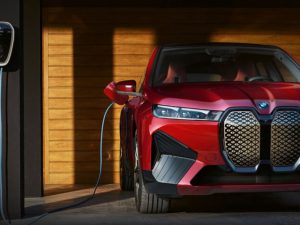
- Expand DCFC access downtown and near key public garages, leveraging federal and state funding to ease “range anxiety”.
- Scale pilots like Voltpost to boost neighborhood-level access.
- Continue bolstering transit electrification and municipal fleet purchases through CHEAPR grants, including a recent $1 million local-government incentive for EVs and chargers.
- Utility-backed charging program, administered by Eversource and UI, is ongoing, with customers covering cost-recovery charges to support long-term infrastructure.
- Aim for full transition of state and municipal fleet vehicles to electric by 2030, with key benchmarks in the next several years
Get Help from Maverick Electric Vehicle Services
Choosing the right charging station provider is key. Maverick Electric Vehicle Services can guide you through the installation process, ensuring you select the right equipment and setup to maximize efficiency and ROI.
Ready to make your EV installation project a reality? Contact us today and let Maverick’s dedicated EV team lead the way!
